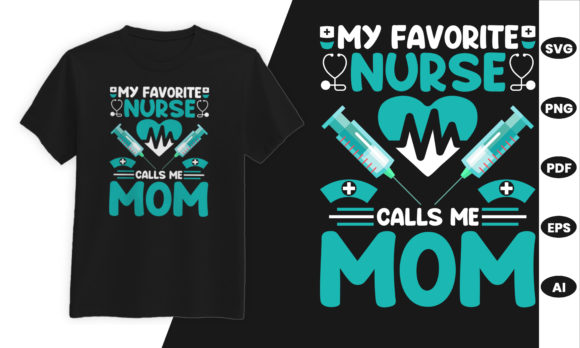
Evaluating Favorite Nurse Calls Me Dad for Embroidery Projects
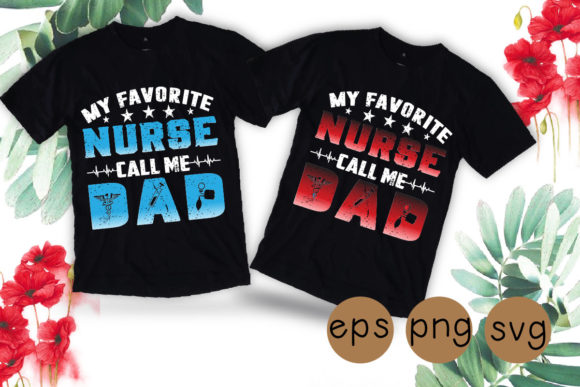
Every time I open a new embroidery design, I picture it stitched onto something real. It’s not just a file; it’s a future project. So, when I loaded Favorite Nurse Calls Me Dad Svg, I immediately imagined its application beyond a t-shirt. This design, squarely in the T-Shirt Designs category, has a straightforward charm that speaks directly to a personal, heartfelt moment. As a graphics piece, its potential for embroidery is rich, but it requires a practical eye to translate it from digital to threaded.
The Immediate Mood and Project Fit
The first impression is one of warm, personal pride. The phrase “Favorite Nurse Calls Me Dad” isn’t just text; it’s a declaration. The layout feels balanced and clear, making it ideal for a central, focal-point embroidery application. It naturally belongs on items meant as gifts or personal keepsakes—think of a custom embroidered sweatshirt for a father, a tote bag for a nurse, or a framed patch for a home office. The visual personality is friendly and confident, without being overly decorative, which means it won’t compete with complex fabrics or intricate stitch techniques.
A Real-Life Scenario: Crafting a Personalized Holiday Gift
Let’s say a client requests a special gift for a nurse who is also a new father. They want something he can use daily that honors both roles. I’d consider a high-quality cotton twill apron or a durable canvas tote bag. Using Favorite Nurse Calls Me Dad Svg as the embroidery file, the design would become a permanent, tactile tribute. The clarity of the message would stitch out cleanly, and on a neutral fabric like navy or grey, a combination of white and a contrasting accent color for “Nurse” would make it pop. The value here isn’t just in the item, but in the perfect personalization—it’s a craft business product that feels uniquely handmade.
Performance Across Real Embroidery Situations
This design shines on stable, medium-weight fabrics. For custom apparel like polo shirts or sweatshirt embroidery, it would be a standout. On baby clothes or nursery decor, if scaled appropriately, it becomes a sweet heirloom piece. As an embroidered patch, it’s excellent—the text is bold enough to remain legible when applied to a cap or backpack. For small shop merchandise, such as boutique kitchen towels or pillow covers, it adds a narrative element that engages buyers looking for meaningful, not just decorative, items.
However, its performance depends heavily on execution. On dark fabric, thread color contrast is critical; a light satin stitch for the text would be essential. On stretchy fabric like a thin t-shirt, a good stabilizer and careful attention to stitch density are non-negotiable to prevent puckering. For a curved surface like a cap, the design’s relatively linear layout would need to be hooped and positioned with precision to avoid distortion at the seams.
Where to Use This Design Carefully
Be cautious with very small hoop sizes. The lettering needs space to maintain its clarity—shrinking it too much for a tiny baby bib could make the smaller details fuzzy. Textured fabrics like thick wool blankets might require a heavier fill stitch to ensure the design isn’t lost in the weave. Also, on products destined for frequent washing, such as work aprons, opting for a robust thread and potentially a slightly increased stitch density will help longevity. The design doesn’t have overly dense areas, which is good, but inspecting the small details in a test stitch is always wise.
Impact on Appeal, Value, and Professionalism
From a commercial embroidery perspective, this design boosts product value through its specific emotional resonance. It’s not generic. For an Etsy seller specializing in personalized gifts, it offers a ready-made solution for Father’s Day, nursing graduations, or thank-you gifts. The stitched result, when done well, builds customer trust—it shows clean, readable craftsmanship. For brand consistency in a shop focused on healthcare or family themes, it’s a cohesive asset.
The giftability is high. A well-embroidered pillow cover or tea towel with this design feels considered and special, elevating it above a simple printed item. In a craft fair setting, such a finished product on display often sparks conversation and direct engagement, as people recognize the personal story it tells. It lends a professional, finished look because the design itself is clean and purposeful, allowing your embroidery skills to be the highlight.
Practical Designer Notes Before You Stitch
Always test this embroidery file on a scrap of your intended fabric first. This gives you a chance to check thread color contrast and review the actual stitch density. I recommend running a test in both a light and dark fabric background if you plan to offer it on multiple products. Use a proper stabilizer suited to your base material—this is especially key for apparel decoration.
For digital product sellers offering printable mockups or design assets, remember that the effectiveness of this graphic for embroidery previews relies on accurate representation. Black and white mockups can help clients visualize it on different colors. Crucially, before selling any finished product or commercial embroidery project using this design, confirm its licensing terms. The description indicates it’s for t-shirt and book cover use, but you must verify if it extends to selling physical embroidered items.
Finally, consider its use in layered garments. If embroidering over a pocket on a shirt, ensure the design layout fits the space without overlapping seams. For a truly polished handmade product, these practical considerations make all the difference between a good idea and a beautifully executed reality.